A single "London, Ontario" keyword strategy misses most of the actual searches your customers are typing. People don't search "plumber London Ontario" as often as you'd think - they search "plumber Old North," "electrician near Byron," or "roofer Wortley Village." City-wide SEO is the foundation, but neighbourhood-level SEO is where London's local businesses actually win the searches that convert.
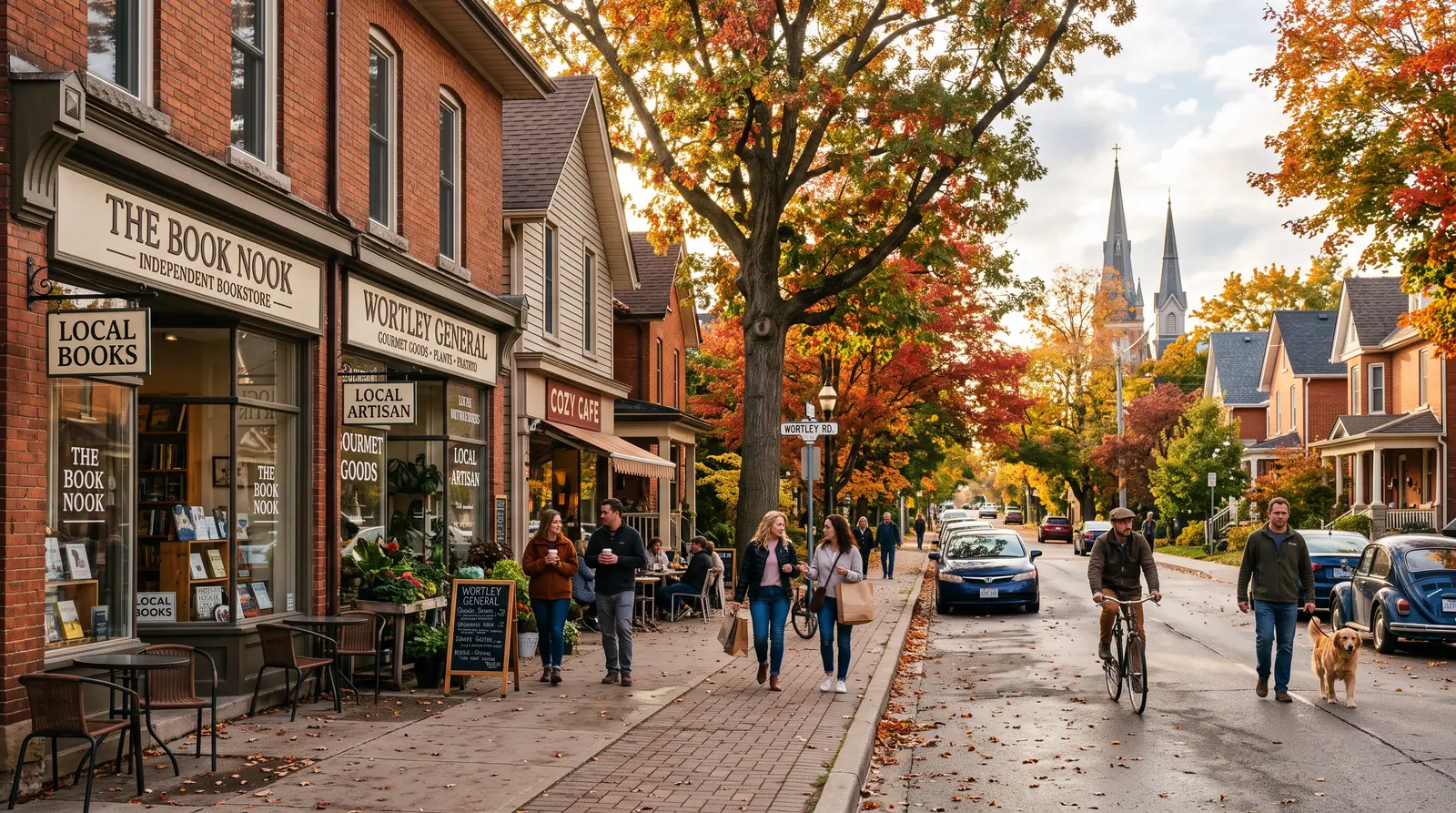
Why neighbourhood-level SEO matters in London specifically
London, Ontario is large enough - over 400,000 residents - to have real search volume broken out by neighbourhood, but distinct enough in character across areas that a generic "London Ontario" page can't speak to all of them equally. A homeowner in Old North searching for a contractor has a different mental picture of "local" than someone in Byron or Lambeth. Businesses that write content and optimize their Google Business Profile with this in mind consistently outperform competitors who only ever mention "London, Ontario" as a single blanket term.
This matters even more given how much less competitive neighbourhood-specific keywords are compared to city-wide terms. "SEO company London Ontario" has real competition. "Bookkeeper Wortley Village" has almost none - which means a well-built neighbourhood page can rank quickly, often within weeks rather than months.
London's key neighbourhoods and what makes each one distinct
Here's a working map of London's most search-relevant neighbourhoods, with the character detail that should inform how you write content for each:
Old North
Historic, tree-lined, home to many of London's older heritage properties near Western University. Residents here often search for renovation, restoration-sensitive contractors, and premium home services. Content referencing heritage home considerations resonates strongly here.
Byron
A established, family-oriented suburb on London's west side with a strong small-business main street feel along Boler Road. Byron residents actively support local independent businesses over big-box alternatives - content that emphasizes local, personal service performs well.
Masonville
Anchored by Masonville Place mall, this is a busy commercial and mixed residential area in north London. High foot traffic and search volume for retail, dining, and professional services searches specific to this area.
Wortley Village
One of London's most distinctive neighbourhoods - walkable, independent-business-heavy, strong community identity in Old South. Wortley Village residents specifically search for and support local, independent businesses; chain-store messaging performs poorly here.
Westmount
A large, established west-London neighbourhood with a mix of family housing and commercial strips along Wonderland Road. Broad service demand across home services, retail, and professional categories.
Argyle
East London, working-class roots, strong sense of community identity. Home services and value-oriented retail see consistent local search demand here.
Old East Village
Rapidly revitalizing arts-and-culture area near Dundas Street East. Increasingly popular with younger residents and new independent businesses - strong opportunity for businesses positioning around creativity, sustainability, or community involvement.
Hyde Park
Fast-growing northwest London suburb with significant new residential development. High demand for home services, movers, and new-homeowner-relevant businesses given the volume of recent move-ins.
Lambeth
South London community with a semi-rural, established feel. Residents often specifically search "Lambeth" rather than "London Ontario" because they identify strongly with the community name.
How to build a neighbourhood SEO strategy that actually works
Step 1: Pick 3-5 neighbourhoods, not all 20+
Identify where you already do the most business, using your Google Business Profile Insights (geographic origin of profile views and direction requests) and your own service/customer records. Building genuinely useful pages for a handful of neighbourhoods beats spreading thin, near-duplicate content across every part of London.
Step 2: Build a dedicated page per neighbourhood - with real distinct content
Each page needs specific local detail: the neighbourhood's character, nearby landmarks or main streets, and how your service applies there. A page that's just your generic service copy with the neighbourhood name swapped in risks being treated as thin or duplicate content by Google. Include a testimonial or case reference from that specific area if you have one.
Step 3: Use neighbourhood names naturally across your GBP
Mention your priority neighbourhoods in your Google Business Profile description and in your weekly GBP posts ("Now serving Wortley Village homeowners with..."). This reinforces the same signals your website is sending and helps Google connect your business to those specific search queries.
Step 4: Earn neighbourhood-specific local links
Neighbourhood associations, local BIAs (Business Improvement Areas) like Wortley Village BIA or Old East Village BIA, and community event sponsorships generate exactly the kind of hyperlocal backlink that helps a neighbourhood page rank. These links are far more valuable for this purpose than generic national directory listings.
What a genuinely good neighbourhood page includes
A neighbourhood page that Google (and readers) treats as valuable rather than thin content includes several specific elements beyond just swapping a place name into a template:
- A specific opening that names the neighbourhood's actual character - not "We proudly serve [Neighbourhood]" but something that demonstrates real familiarity, like referencing the area's main street, housing stock era, or known local landmarks.
- Service framing relevant to that area's housing or demographics - heritage home considerations for Old North, new-build considerations for Hyde Park, walkability and foot traffic for Wortley Village.
- A local testimonial or project reference from that specific neighbourhood if you have one - even a short quote naming the area adds genuine local proof.
- An embedded map or clear description of your service radius relative to that neighbourhood, so both readers and Google understand the geographic relevance.
- LocalBusiness or Service schema referencing the specific neighbourhood as an area served, reinforcing the page's local relevance machine-readably.
Pages missing all of this - generic copy with only the neighbourhood name changed - are exactly what Google's local content quality systems are built to detect and discount. The extra 20-30 minutes it takes to add genuine local specificity is what separates a page that ranks from one that doesn't.
Setting up your Google Business Profile service areas to match
Your website content should be mirrored in your Google Business Profile's service area settings. If Byron, Masonville, and Wortley Village are your three priority neighbourhoods, add them as specific service areas in your GBP (Google supports up to 20). This reinforces the exact same geographic signals your website pages are sending, and helps Google connect searches from those specific areas to your business more confidently in both the Map Pack and standard local search results.
Keep the service areas realistic - a business claiming all 20 London neighbourhoods plus surrounding towns dilutes its relevance signal for any one of them. Match your GBP service areas to the same 3-5 neighbourhoods you've built dedicated pages for, and expand deliberately over time as those pages start ranking and generating business.
Measuring whether neighbourhood SEO is working
Track three specific signals per neighbourhood page over 60-90 days: its individual ranking position for the neighbourhood + service keyword (check in incognito mode or via Google Search Console's Performance report filtered to that page), the page's own organic traffic in Google Analytics, and any increase in Google Business Profile direction requests or calls originating from that area (visible in GBP Insights). A neighbourhood page that isn't moving any of these three numbers after two to three months likely needs stronger content, more local citations, or isn't actually aligned with where your real customer demand comes from.
A word of caution: don't dilute your authority
The most common mistake London businesses make with neighbourhood SEO is trying to cover too much ground too fast - publishing 15 thin neighbourhood pages in a week using a copy-paste template. This tends to backfire: Google's quality systems are specifically tuned to detect and discount duplicate or near-duplicate local pages. Better to build one genuinely strong, detailed neighbourhood page per month than a dozen shallow ones all at once.
If you want help identifying which London neighbourhoods offer the best opportunity for your specific business and building pages that actually rank, our local SEO service is built around exactly this kind of hyperlocal strategy. Start with a free SEO audit to see where your current visibility stands.