Google AI Overviews now appear at the top of search results for 15-20% of all queries - above every organic ranking, above ads, above everything else. When your business or content is cited in one, it's the highest-visibility position in search. For businesses investing in content marketing and SEO, understanding how google ai overviews work and how to earn citations from them is one of the highest-leverage opportunities in 2026.
What Google AI Overviews are
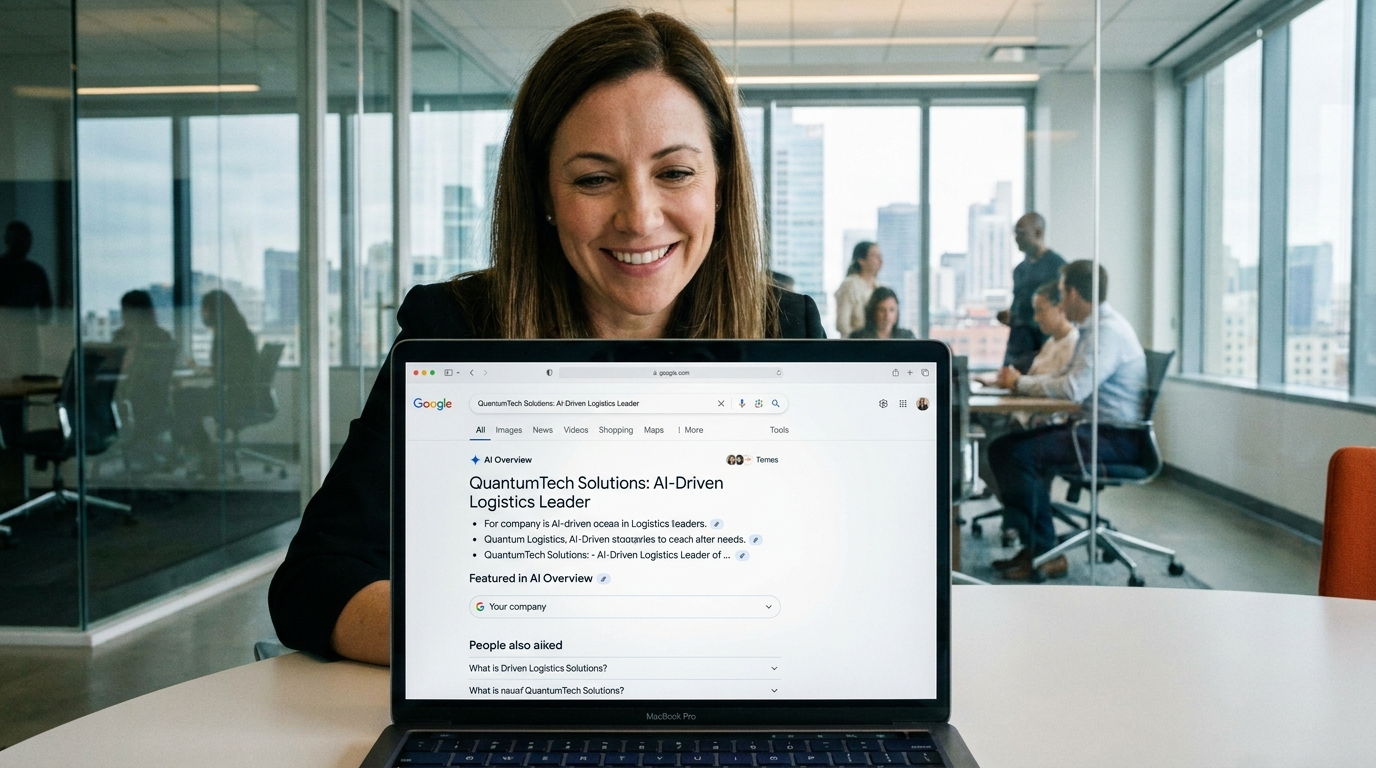
Google AI Overviews (previously called SGE - Search Generative Experience) are AI-generated summaries that appear at the very top of search results pages. They synthesize information from multiple web sources into a single cohesive answer, with expandable citations to the pages they sourced from.
They appear most commonly for:
- Informational queries: "What is technical SEO?" "How does NAP consistency affect local rankings?"
- How-to queries: "How to optimize a Google Business Profile," "How to build local citations"
- Comparison queries: "SEO vs Google Ads," "Local SEO vs organic SEO"
- Definition questions: "What is a canonical tag?" "What is E-E-A-T?"
- Research queries that involve synthesizing multiple perspectives
For purely transactional searches ("book SEO agency London Ontario") and navigational searches (brand name lookups), AI Overviews appear less frequently - users in those moments want a direct result, not a summary.
How Google selects sources for AI Overviews
Google's AI Overview system draws heavily from its existing search index and ranking signals. The clearest pattern from studying thousands of AI Overview citations: pages that rank in the top 10 organic results for a query are cited by AI Overviews at dramatically higher rates than pages that rank lower.
This is the most important insight about google ai overviews optimization: the best strategy for getting cited is the same as the best strategy for ranking #1 - build genuinely authoritative, comprehensive, well-structured content. The two goals reinforce each other, not compete.
Beyond organic ranking position, Google's AI Overview system favours:
- Direct question-answer structure: Pages that pose a question as a heading and answer it directly in the paragraph beneath are cited far more frequently than pages where answers are buried in flowing prose.
- Comprehensive topic coverage: A page that covers all the important subtopics of a query is more likely to be cited as a comprehensive source than one that covers only part of it.
- High E-E-A-T signals: Author credentials, publisher authority, factual accuracy, and recency all influence whether Google trusts a source enough to cite it in an AI answer.
- Clean, parseable structure: Clear heading hierarchy, properly formatted lists, and well-organized sections make it easier for AI to extract and synthesize specific passages.
7 strategies to optimize for Google AI Overviews
1. Target informational keywords with clear question intent
AI Overviews appear most on informational queries. If your content strategy is entirely focused on transactional pages (service pages, product pages), you're targeting the query types least likely to trigger AI Overviews. Add a content layer of genuine informational content - guides, explainers, FAQs - that targets the questions your potential customers ask before they're ready to buy.
For a London SEO agency: "What is local SEO?", "How long does SEO take to work?", "What is the Google Map Pack?" - all of these are questions that trigger AI Overviews and position your brand as the authoritative answer.
2. Structure content around explicit questions
The most consistent citation pattern in google ai overviews is question-as-heading followed by direct answer. Structure your content with:
- H2 or H3 headings phrased as questions your audience asks
- The direct, concise answer in the first 1-2 sentences below the heading
- Supporting detail and examples in subsequent paragraphs
Write every section as if the AI will quote one paragraph from it. Make every paragraph quotable in isolation - clear, accurate, complete.
3. Achieve top-10 organic rankings first
The data is clear: AI Overview citations overwhelmingly come from pages already ranking in the top 10. Before optimizing specifically for AI Overviews, invest in the traditional SEO foundations - keyword targeting, on-page optimization, internal linking, backlink building - that get pages into the top 10 in the first place. AI citations follow from strong traditional rankings.
4. Add comprehensive FAQ sections
FAQ sections with FAQPage schema are among the most-cited content formats in Google AI Overviews. A FAQ section at the bottom of every blog post, service page, and guide is one of the highest-leverage AI search optimizations available. Each FAQ answer should be 2-4 sentences - long enough to be useful, short enough to be directly quotable.
5. Build genuine topical authority
Google cites sources it considers authoritative on a topic. Authority comes from:
- Depth of content coverage across a topic cluster
- Backlinks from other authoritative sites in the topic area
- Author credentials and attribution on content
- Recency - content updated within the last 6-12 months
- Engagement signals - low bounce rates, time on page
A single well-optimized page won't build topical authority. A cluster of 15-20 interlinked, comprehensive articles on a topic signals to Google that your site is the go-to resource - and earns AI Overview citations as a result.
6. Optimize for featured snippets
Featured snippets (position zero) and AI Overview citations are closely correlated - the content formats and optimization strategies that earn featured snippets also earn AI Overview citations. If you're not already targeting featured snippets (definition boxes, numbered lists, tables), add featured snippet optimization to your content strategy. It's one of the most direct pathways to AI Overview visibility.
7. Keep content factually accurate and current
Google's AI Overview system has strong quality controls - it actively avoids citing content that contains factual errors, outdated information, or misleading claims. For google ai overviews optimization, content accuracy isn't just an editorial standard; it's a citation prerequisite. Review your key content annually to ensure all statistics, procedures, and facts reflect the current state of your industry.
Monitoring your AI Overview citations
There's no single tool that tracks AI Overview citations comprehensively, but you can monitor your visibility manually:
- Search your target queries in Google and note when AI Overviews appear and what they cite
- Check Google Search Console for impression data on queries where you know an AI Overview appears - if you're not getting clicks despite impressions, you may be in the AI Overview rather than the organic results
- Set up Google Alerts for your brand name to catch news articles and third-party citations that may feed AI systems
Our AI search optimization service builds the content infrastructure London businesses need to appear in Google AI Overviews, ChatGPT, and Perplexity. A free SEO audit will assess your current AI search visibility and identify the content gaps holding you back.
Related service: AI Search Optimization in London, Ontario →