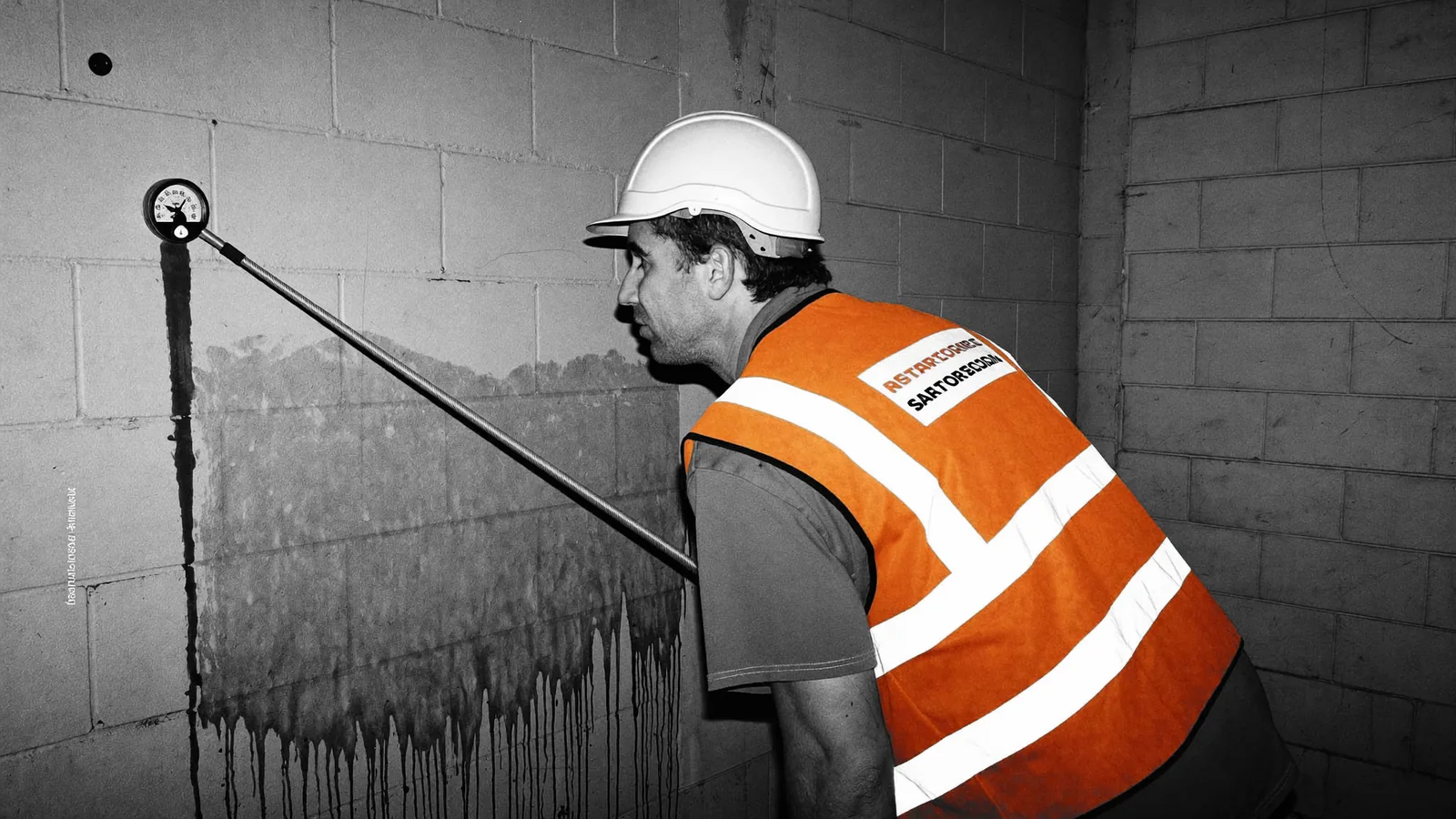
SEO for waterproofing companies in Toronto works best when it follows the weather. A homeowner searching for basement waterproofing, a sump pump or a leaking foundation wall is usually dealing with water they can see, and they want a licensed, insured contractor who will answer the phone and explain the fix honestly. If you want a full plan around that behaviour, our SEO services in Toronto combine technical SEO, content, local SEO and AI search optimization. This guide shows how waterproofing and foundation companies can be found at the moments that matter, trusted before the first call and described accurately by AI assistants, and how to measure real estimates instead of traffic.
Why SEO and AI search are the main sales channel for waterproofing in Toronto
Waterproofing is a high-ticket, low-frequency purchase, so nearly every customer researches it online, and most of them are under pressure. A basement that floods after a storm or a damp wall discovered during a home sale leaves little time for a long comparison. People search, scan the first few results and the map listings, read reviews and call two or three companies.
The Toronto market has specific features that shape search. Much of the city's housing was built decades ago, with foundations of brick, stone, block or early concrete, and heavy clay soils that hold water against walls. Freeze-thaw cycles and spring melt create seasonal spikes, and intense summer storms add sudden demand. Many homeowners also buy older houses and discover moisture only during inspection, renovation or after the first heavy rain. These patterns mean the strongest SEO programs are timed to the calendar and written for people who are worried, not browsing.
AI assistants now sit beside search engines in this journey. A homeowner may ask ChatGPT or Google's AI Overviews what causes a wet basement, whether interior or exterior waterproofing is better, or how to choose a contractor in Toronto. Those tools quote pages they find clear and trustworthy. Our guide to AI search vs traditional SEO explains how the two relate. For a contractor, being a source those tools cite accurately is a long-term advantage that costs nothing per click.
How homeowners search for waterproofing in Toronto
Waterproofing searches fall into clear categories, and each one needs a different page. Mapping them is the foundation of your keyword and content plan. The queries below are example families, not measured volumes, so confirm what works for you in Google Search Console and in your own lead data.
| Search type | Example | Urgency | What the homeowner needs to see |
|---|---|---|---|
| Emergency flooding | flooded basement Toronto, emergency sump pump repair | Hours | Open now, call button, area served, honest response time |
| Active leak or damp | basement leaking Toronto, wet basement repair | Days | Clear explanation of causes and a fast estimate path |
| Solution research | interior vs exterior waterproofing, weeping tile replacement | Weeks | Honest comparison, methods, risks and limits |
| Cost research | basement waterproofing cost Toronto | Weeks | What drives cost and how estimates are written |
| Pre-purchase or pre-sale | foundation crack repair before selling, home inspection basement issues | Days to weeks | Inspection support, transferable warranty information |
| Specific products | backwater valve Toronto, sump pump installation Toronto | Weeks | Product-specific service page with permits and subsidy notes |
Many of these are "near me" style searches that Google resolves by relevance, distance and prominence. Our guide to ranking for near me searches explains how that works. Emergency searches follow the same logic we describe in our guide to SEO for HVAC and plumbing companies in Toronto: accurate hours, a phone that reaches a person and a visible service area decide who wins them.
Google Business Profile for waterproofing contractors
For most waterproofing leads, the Google Business Profile is the first impression, and it decides whether a homeowner taps call, reads reviews or keeps scrolling. It shows your rating, photos, hours and service area before anyone visits your website. Our Google Business Profile optimization service covers the full process, and these points matter most.
Categories and services
Pick the most specific primary category that describes your core business, then add secondary categories for services you really perform. Category names change, so check your dashboard. Contractors in this field often choose categories such as waterproofing contractor and foundation repair service, and may add others like drainage service or concrete contractor if those describe real work. Do not add categories for work you do not do. Our guide to choosing Google Business Profile categories shows how to decide.
Service-area setup
Most waterproofing companies travel to customers and do not welcome visitors, which makes them service-area businesses. Google lets you hide your address and list the areas you serve, and it does not allow virtual offices or mailboxes. Our guide to service-area businesses on Google explains the rules and how to avoid mistakes that lead to suspension.
Name, hours and phone
- Use your real business name, without extra keywords such as "waterproofing Toronto".
- List hours that match how you actually answer. If you run an after-hours emergency line, say so in the description and make sure a person can book a visit.
- Use a phone number that connects directly to your business, and keep it consistent across your site and listings.
Photos of real jobs
Photos build trust faster than any adjective. Upload real photos of your crew, trucks, equipment and finished work, including excavations, membranes, drainage and sump installations, with the homeowner's permission where a home is visible. Avoid stock photos, and update images as your work changes.
Website structure: service pages, area pages and proof
A waterproofing website should have one clear page for each service you sell, a handful of area pages that are genuinely useful and visible proof of who you are. Structure helps homeowners decide and helps search engines understand what you do and where.
One page per service
Give each core service its own page, such as interior waterproofing, exterior waterproofing, weeping tile replacement, sump pump installation, backwater valves, foundation crack repair and window well drainage. Explain the problem it solves, how the work is done, when it is the right choice and when it is not, what affects cost, how long it takes, which permits apply and what the warranty covers. A single page that lists every service cannot rank well for any of them. Our on-page SEO checklist shows how to structure titles, headings and links.
Area pages that earn their place
If you serve parts of Toronto and the GTA, create pages for the areas you truly cover, such as East York, North York, Etobicoke, Scarborough, the Annex or Mississauga. Each page should contain something real: the housing types you commonly work on, typical water problems you find, how quickly you can respond and recent jobs with permission. Avoid near-identical pages with only the place name changed, which Google may treat as low-value.
Proof pages
Create pages that show your credentials and process: insurance and WSIB coverage, warranty terms, your estimate process, your crew and your safety practices. These are the pages a cautious homeowner opens before calling.
A visible path to an estimate
Every page needs a clear next step: a click-to-call button, a short estimate request form and visible hours. Keep forms short, and respond quickly, since a delay of a day can lose the job to a faster competitor.
E-E-A-T for contractors: proving you are who you say you are
Google's quality framework, E-E-A-T, stands for Experience, Expertise, Authoritativeness and Trustworthiness, and it applies to contractors as well as clinics. It comes from Google's guidance on helpful, reliable, people-first content and the Search Quality Rater Guidelines. Google says E-E-A-T is not a single ranking factor, but it describes what its systems try to reward.
- Experience: real project write-ups with photos, written by the people who did the work, describing what they found and what they did.
- Expertise: named team members with relevant training, trade certifications and engineering relationships where structural work is involved.
- Authoritativeness: membership of relevant associations, supplier or manufacturer certifications, mentions from credible local sources and links from home inspectors, realtors and publications.
- Trustworthiness: proof of insurance and WSIB coverage, written warranties, clear contact details, honest explanations of limits and a transparent estimate process.
Be careful to claim only what is true. A licence, certification or insurance statement should be verifiable, and any warranty claim should match the written terms. We explain how to show these signals in our SEO services overview.
Content that homeowners and AI tools both want
The content that wins in waterproofing answers real questions clearly, in the order a worried homeowner would ask them. It also happens to be the content AI assistants prefer to quote.
- Causes of wet basements. Surface water, grading and downspouts, window wells, cracks, failed weeping tile, high groundwater and plumbing.
- Interior vs exterior waterproofing. What each does, when each is appropriate and the trade-offs, in honest terms.
- Sump pumps and backwater valves. How they work, battery backup and what the City of Toronto's programs support.
- Cost factors. What drives price and how an estimate is built, without exaggerated promises.
- Buying and selling. What home inspection findings mean and how warranties transfer.
- Insurance. How sewer backup and water damage coverage commonly work and what to ask your insurer.
- Seasonal checklists. A pre-spring checklist and a post-storm checklist.
Put a short, direct answer at the top of each page, then add detail with headings, lists and tables. Our overview of answer engine optimization explains why that format works for AI tools.
Seasonal planning: publish before the water arrives
Waterproofing demand follows the weather, so your content and profile updates should be timed ahead of each spike. Google needs time to recrawl pages and homeowners need time to find you, so anything published during the rush is late.
| Period | Common demand pattern | What to publish or update |
|---|---|---|
| Late winter | Planning before the thaw, early melt leaks | Pre-spring waterproofing checklist, sump and drain inspection pages |
| Spring | Thaw, rain, active leaks and flooding | Emergency page, causes of leaks, estimate booking, extended hours notice |
| Early summer | Storm damage, window wells, grading | Window well drainage and grading guides, backwater valve information |
| Late summer | Pre-fall projects while ground is workable | Exterior waterproofing scheduling and lead-time pages |
| Fall | Projects before freeze, pre-sale repairs | Project timelines, pre-sale and inspection guides |
| Winter | Interior work, planning, frozen-ground limits | Interior solutions, next-season planning and cost explainers |
This table describes a general pattern in Ontario. Your own call and estimate history is a more reliable guide, so look at the months your phone rang most over the last two or three years and plan content four to six weeks ahead of each one.
Reviews and reputation for contractors
Reviews are often the deciding factor when a homeowner compares two companies that are both nearby and both reachable. Google says review count and ratings contribute to prominence, one of its three local ranking factors. A steady flow of recent, genuine reviews therefore helps rankings and conversion.
- Ask at the right moment. Right after the job passes inspection and the homeowner has seen the result, send a short text or email with your review link.
- Ask everyone. Do not pick only the happiest customers. Google's policies prohibit review gating and incentivized reviews.
- Make it easy. One tap to the review form from a phone.
- Reply to every review. Thank positive reviewers specifically, and respond to negative ones calmly and offer to make it right by phone.
- Encourage detail. Reviews that mention the problem and the fix help future customers and help Google understand your work.
Our guide to how to get more Google reviews describes a simple, compliant process.
Local SEO: citations, directories and community signals
Local SEO tells Google that your business is real, where it operates and what it does, using consistent information across the web. For a contractor, directories, supplier listings and local organizations all contribute.
- Consistent name, address and phone number on your website, profile and every directory. Our guide to NAP consistency shows how to audit it.
- Relevant citations. Prioritize reputable home services, trade and Ontario directories. See our list of local citation directories for Ontario businesses.
- Association and supplier listings. Manufacturer dealer pages, trade associations and certification bodies that list members.
- Community presence. Local sponsorships, neighbourhood groups and events that publish about you.
- Tracking numbers with care. Keep your real local number as the primary number in directories and use tracking numbers only where they will not create inconsistent listings.
Technical SEO for contractor sites
A contractor website must load fast on a phone, work on a poor connection and make calling easy, because many visitors are standing in a wet basement when they search. Technical problems silently cost calls.
- Speed. Compress photos, avoid heavy sliders and video backgrounds and test on mobile. Our guide to technical SEO basics explains the checks in plain English.
- Click-to-call. A sticky call button on mobile, and the number shown as text.
- Indexing and structure. Make sure service and area pages are crawlable, linked from navigation and have unique titles and descriptions.
- Forms. Short estimate forms that send instantly and confirm to the visitor.
- Structured data. Add LocalBusiness markup, using more specific types where they fit, with details that match the visible page. Structured data helps search engines read your information and does not guarantee a ranking.
- Security. HTTPS, updated software and protected forms.
AI search optimization for waterproofing companies
AI assistants answer questions by retrieving and summarizing web pages, so being cited depends on pages that are clear, crawlable and consistent. For home services, the tools lean on pages that state exactly who the company is, what it does and where, supported by reviews and listings that agree with each other.
Let the right crawlers in
Check your robots.txt file and your hosting and security settings so that the search bots you want, such as Google's, OpenAI's search crawler, PerplexityBot and Claude's search bot, can reach your public pages. Blocking them makes you ineligible to be cited by those tools. Our guide to how to get cited by ChatGPT explains the access side.
State facts plainly
Write services, areas, hours, credentials and warranty terms as plain text that is easy to read and verify. Vague phrases such as "quality service" give an AI tool nothing to use.
Keep everything consistent
AI tools cross-check sources. If your services, areas, phone number or credentials differ between your website, profile and directories, the tools may describe you incorrectly or skip you. Align everything and correct outdated listings.
Test real questions monthly
Each month, ask the main AI tools what homeowners ask, such as how to choose a waterproofing contractor in Toronto or what causes a wet basement. Record whether you are mentioned, how you are described and which sources are cited. Our AI search optimization service includes this testing, and our guide to how to show up in Google AI Overviews adds detail.
Link building and referral relationships
Links from credible, relevant sources help authority, and in this trade the best ones come from relationships. Never buy links or join link schemes, which Google's spam policies prohibit.
- Home inspectors and realtors who refer clients, and may list you in resource pages.
- Insurance brokers and restoration companies that deal with water damage.
- Engineers and architects who work with you on structural jobs.
- Suppliers and manufacturers with dealer or installer directories.
- Local media after major storms, when reporters need informed contractors to comment.
- Original resources such as a pre-spring checklist or a homeowner's guide to basement water that others want to cite.
Organic search against paid ads for a seasonal trade
Organic search builds lasting visibility, while paid ads fill gaps quickly and stop when the budget stops. For a seasonal trade, many companies use ads during spikes and invest in SEO to reduce dependence on them. Google also offers Local Services Ads in some categories and regions, where businesses are verified and pay per lead, so check Google's current documentation for availability and rules in your category before planning around it.
The trade-offs are explained in our guide to SEO vs Google Ads. If you run ads, keep the claims factual, send traffic to pages with a clear call button and measure cost per booked estimate instead of clicks.
Warranty and transferability: a conversion and trust asset
For a job that costs thousands of dollars and sits behind a wall, the warranty is part of what the customer is buying, so it deserves its own page and clear wording. Vague promises such as "lifetime guarantee" make careful homeowners more suspicious, not less.
State what the warranty covers, for how long, who performs remedial work, what voids it and whether it transfers to a new owner. Transferability matters in Toronto because many customers fix a basement before selling, and a buyer's lawyer or home inspector will ask for documents. A warranty that passes to the next owner can be a real selling point for the homeowner. Publish the wording as a document or a clear summary, and keep it consistent with what your crews and estimators tell customers. AI tools tend to quote whatever your pages say, so a clear, accurate warranty page prevents wrong summaries.
Insurance, subsidies and the questions homeowners really ask
Homeowners researching waterproofing ask about money and risk as much as methods, and pages that answer those questions earn trust. Three areas come up constantly.
- Insurance. Many home insurance policies in Ontario offer optional sewer backup or water damage coverage, and the details vary by insurer. Explain in general terms that homeowners should check their policy and speak to their broker, and do not give coverage advice yourself.
- City programs. The City of Toronto has offered subsidy programs for basement flooding protection, such as backwater valves and sump pumps, so mention that homeowners should check the City's current programs and eligibility on toronto.ca rather than quoting amounts that may change.
- Permits and approvals. Some work, such as underpinning or changes near a ravine, may need permits or conservation authority approval, while many waterproofing repairs do not. Explain this honestly and say you will flag requirements at the estimate.
Keep the tone factual. You are a contractor, not an insurer or a lawyer, and saying so makes the rest of the page more credible.
The estimate page: turning a worried visitor into a booked visit
The page that explains how estimates work is one of the highest-converting pages a contractor can have. A homeowner who knows what will happen next is far more likely to call.
- Explain what the visit involves. Who comes, how long it takes and what they inspect inside and outside the home.
- Say what you need from them. Access, a description of where water appears and any past repairs or reports.
- Describe the written estimate. What is included, how it is itemized and how long it is valid.
- Be honest about options. If a smaller fix may solve the problem, say so, and explain when a larger one is justified.
- Show response times you can keep. Promise only what your schedule supports.
- Make it easy to start. A call button, a short form and a clear confirmation message.
Pair this with a short checklist homeowners can run before you arrive, such as noting where and when water appears, checking downspouts and grading and photographing damp areas with a date. It positions you as helpful and gives you better information at the visit.
Service page playbooks: what each waterproofing page needs
Each service answers a different worry, so each page needs a different emphasis. These outlines show what to include. Adapt them to the work you actually perform and the way your estimators explain it.
- Interior waterproofing and drainage. Explain how interior drainage manages water that reaches the foundation, when it fits and what it does not do. Describe the typical process, the sump involvement and how long the work disrupts the home.
- Exterior waterproofing. Explain excavation, membranes, drainage and backfill, the access and landscaping impact, the seasons when it is practical and why it costs more than interior work in many cases. Be honest about when it is and is not necessary.
- Weeping tile replacement. Describe how failed drains cause problems, how they are inspected, for example with a camera, and what replacement involves. Avoid scaring homeowners, and explain signs that are worth checking.
- Sump pumps and backwater valves. Cover pump types, battery backup, maintenance, how backwater valves protect against sewer backup and which permits or City programs may apply. Link to the City of Toronto's current information instead of quoting figures.
- Foundation crack repair. Explain the difference between cosmetic and structural cracks, when injection is used and when an engineer should assess movement. Never promise that every crack is a simple fix.
- Window wells and grading. These are often the cheapest fixes for leaks and deserve a page, since honest advice here builds trust and wins referrals.
On every page, show real project photos, name the crew lead where possible and explain the written estimate. Pages that read like a brochure convert worse than pages that read like a clear conversation with a knowledgeable contractor.
Handling storm surges and peak-season capacity
After a major storm, search demand spikes within hours, and a company that cannot answer will lose the lead to one that can. Plan capacity before the season so that marketing does not outrun your crews.
- Staff the phones. Make sure someone can answer or return calls quickly during storms, and set expectations on your site about response times.
- Prepare a surge page. A short page for urgent flooding that explains what to do first, how to stay safe and how to book an assessment.
- Update your profile. Adjust hours and add a post about emergency availability, and remove it when capacity is full.
- Be honest about wait times. A clear message such as an expected response window earns more trust than silence.
- Follow up after the rush. Ask for reviews from emergency customers once the work is complete.
Measuring booked estimates and revenue
The only measure that matters is booked estimates and the revenue they produce, because traffic does not pay for crews. Set up tracking that connects each lead to a source and an outcome.
| What to track | How to measure it | Why it matters |
|---|---|---|
| Calls from your Google profile | Business Profile performance data | Shows local demand from search and maps |
| Calls from your website | Call tracking numbers or click-to-call events | Separates web demand from other channels |
| Missed call rate | Phone system or call tracking reports | Reveals lost jobs |
| Booked estimates by source | Job software or a spreadsheet with a source field | Connects SEO to real visits |
| Close rate and job value | Estimates sent compared with jobs won | Shows which channels bring the best work |
| Search visibility | Google Search Console clicks and impressions for service pages | Shows which pages earn attention |
| AI mentions and accuracy | Monthly prompt testing | Shows whether you are cited and described correctly |
Record the source of every job in your job software, even with a simple drop-down such as "Google profile", "Website", "Referral" and "Other". After a quarter you will know which channel brings the best jobs, not only the most calls.
A 90-day plan for a waterproofing company
- Days 1 to 15: audit. Review your site, profile, listings and calls. Test your phone at night and on a weekend. Fix hours, categories and any claims you cannot verify.
- Days 15 to 30: foundations. Correct your Google Business Profile, align your business information across the web and fix technical issues such as speed, indexing and structured data.
- Days 30 to 60: core pages. Publish or rewrite your main service pages, emergency page, proof pages and the first area pages with real photos and details.
- Days 60 to 90: trust and reach. Launch a review routine, build two or three referral relationships and start monthly AI prompt testing and reporting.
After 90 days, keep publishing decision guides, refresh pages before each season and review results monthly. Our guide to how long SEO takes to work sets realistic expectations.
Common mistakes waterproofing companies make online
- One page for every service. A single services page cannot rank for sump pumps, exterior waterproofing and crack repair at the same time.
- Keywords in the business name. Adding "waterproofing Toronto" to a profile name risks suspension.
- Virtual office addresses. Google does not allow them.
- Copied area pages. Dozens of near-identical pages add no value.
- Unanswered phones. A missed emergency call goes to the next company on the list.
- Vague warranties. Claims such as "lifetime guarantee" without written terms damage trust.
- Stock photos. Homeowners recognize them, and real photos convert better.
- Different details across listings. Inconsistent phone numbers or areas confuse customers and AI tools.
- No tracking. Without lead sources, every decision is a guess.
Choosing an SEO partner as a contractor
A good partner understands seasonal demand, service-area rules and how to prove trust, not just how to chase rankings. Ask what they will do each month, what they will not do and how they report. Be cautious of anyone who guarantees rankings, uses fake reviews or link schemes or promises results in days. Our guide to how to hire an AEO or GEO agency has nine questions you can adapt. You should own your website, analytics and Business Profile at all times, receive plain-English reports and have scope in writing.
Start with a free audit
The fastest way to see where your company stands is a free audit of your website, your Google Business Profile and your visibility in AI search. We review public information only and send a short, prioritized list of what to fix first, with no contract and no obligation.
Bradlex SEO is a Toronto SEO agency led by Andrew Bradlex, who has more than ten years of experience in search, and you work directly with the founder. To request your audit, use the free audit button on this page or visit our contact page.
Common questions
How do waterproofing companies get more calls from Google?
Win emergency and seasonal searches with an accurate Google Business Profile, a call button that reaches a person and one detailed page for each service and area. Add proof of insurance, WSIB coverage and warranty terms, collect genuine reviews and track which sources produce booked estimates.
Which Google Business Profile categories fit a waterproofing company?
Choose the most specific primary category for your core work and add secondary categories only for services you perform, such as foundation repair or drainage. Category names change, so check your dashboard. Never add categories for work you do not do.
Should a service-area waterproofing company hide its address?
If customers do not visit your premises, Google lets you hide the address and list service areas. Do not use a virtual office or mailbox to appear in a neighbourhood. Keep your service areas realistic and your business information consistent everywhere.
When should a waterproofing company publish seasonal content?
Four to six weeks before each demand spike. Publish pre-thaw checklists in late winter, storm and window well guides before summer, and exterior project timelines in late summer. Google needs time to recrawl pages, and homeowners need time to find you.
How do I rank for emergency basement flooding searches?
Show accurate hours, a phone number that reaches a person and a clear service area on your profile and on a dedicated emergency page. Keep reviews recent, reply to them and make the call button one tap on mobile. Nobody can pay for a better local position.
Should I mention City of Toronto subsidies on my website?
Yes, carefully. Tell homeowners to check the City of Toronto website for current basement flooding protection programs and eligibility rather than quoting amounts that may change. Explain that you are a contractor, not the program administrator, and say what you can install.
How do I get AI tools to cite my waterproofing company?
Allow search bots, write plain, factual service and warranty pages, keep your name, address, phone number and services consistent across listings and earn genuine reviews. No tool guarantees citations, so test real homeowner questions monthly and correct whatever sources are wrong.
How do I track whether SEO is producing booked estimates?
Record the source of every call and estimate in your job software, even with a simple drop-down. Combine Google Business Profile call data, call tracking where appropriate and a monthly count of booked estimates and won jobs by source.

Andrew Bradlex
Founder, Bradlex SEO
Andrew founded Bradlex SEO in 2020 after more than 10 years in SEO, working his way up from junior SEO technician to SEO Director at Canadian agencies. He has led or contributed to more than 700 SEO projects across over 50 industries. Bradlex SEO helps businesses get found on Google Search, in the Google Map Pack and in AI answers, from its base in Toronto, and serves clients across Canada. He is responsible for the guidance in this article. Read more about Andrew and the agency.